
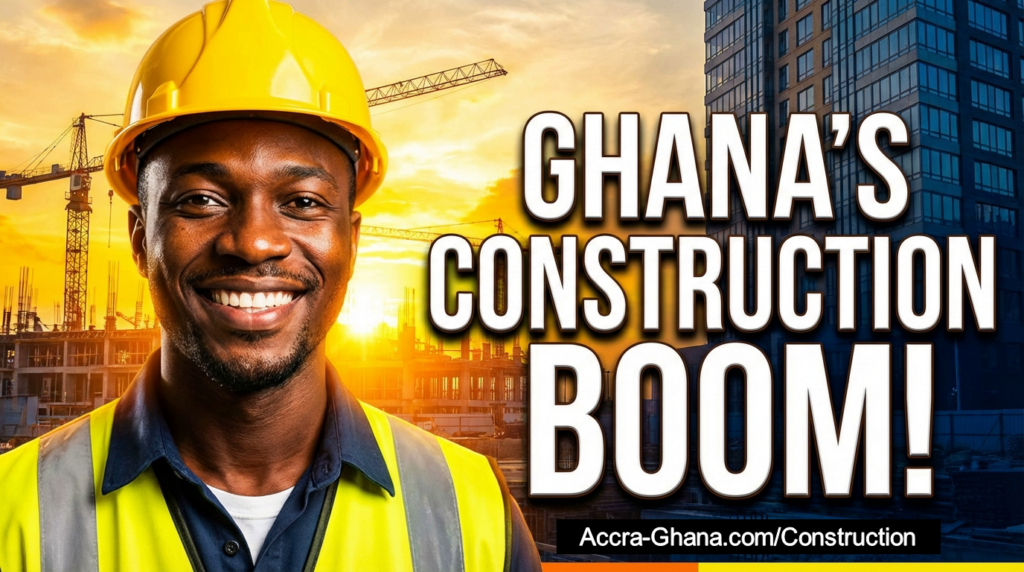
Construction in Ghana is a fast-growing industry driving the country’s urban development and infrastructure expansion. From the bustling streets of Accra to emerging towns across the Greater Accra Region, residential, commercial, and public projects are reshaping the landscape.
Housing
Rapid population growth, rising housing demand, and government infrastructure investments fuel this boom, creating opportunities for developers, contractors, and investors.
Ghana
The sector faces challenges such as high material costs, land disputes, and imported equipment reliance, but continues to attract both local and foreign participation. Understanding Ghana’s construction trends is essential for anyone interested in real estate, urban planning, and economic growth.
Construction
Construction in Ghana is one of the most important sectors of the country’s economy, shaping everything from housing and roads to commercial buildings and infrastructure. The industry contributes significantly to employment and national development, accounting for about 6% of Ghana’s GDP and involving thousands of registered companies and contractors across the country.
Types of Construction Projects in Ghana
Over the past two decades, rapid urbanization, population growth, and real estate demand—especially in cities like Accra, Kumasi, and Takoradi—have driven a massive building boom. New residential estates, shopping centers, roads, and office complexes continue to transform the urban landscape.
1. Residential Construction
Residential construction is the most common type of building activity. This includes:
Single-family houses (bungalows or storey buildings)
Apartment complexes
Luxury gated communities
The average construction cost varies widely depending on the level of finishing. Basic residential houses can cost about GHS 2,500–3,500 per square meter, while high-end homes may exceed GHS 8,000 per square meter.
2. Commercial Construction
Commercial projects include:
Office buildings
Shopping malls
Hotels
Warehouses
These buildings typically cost more due to electrical systems, elevators, air conditioning, and safety infrastructure.
3. Infrastructure Construction
Infrastructure projects are usually funded by government or international investors and include:
Roads and highways
Bridges
Airports
Ports
Hospitals and schools
Large infrastructure projects often involve foreign construction companies, which account for roughly 12% of registered construction firms in Ghana.
Major Building Materials Used in Ghana
Common materials used in construction include:
Cement
Steel reinforcement bars (iron rods)
Sand and gravel
Concrete blocks
Roofing sheets
Tiles and wood
Cement consumption alone reached about 8.5 million metric tons in 2023, showing the massive demand for building materials across the country.
Materials represent the largest share of construction costs, accounting for about 55% of total project expenses.
Construction Costs in Ghana
Construction costs in Ghana have fluctuated heavily in recent years due to inflation, exchange rates, and imported materials.
Recently, the situation has improved:
Construction inflation dropped significantly from over 23% in early 2025 to around 3.9% by early 2026.
Prices of key materials like cement and reinforcement steel have fallen slightly, offering relief to builders.
However, despite falling construction inflation, property prices remain high due to land costs and demand for housing in major cities.
Major Challenges in Ghana’s Construction Sector
1. High Cost of Materials
Many building materials are imported, making them vulnerable to currency fluctuations and global supply chain issues.
2. Housing Shortage
Ghana faces a housing deficit estimated in the millions, making affordable housing a major challenge.
3. Infrastructure and Logistics
Transportation challenges and port delays increase the cost of importing building materials.
4. Land and Legal Issues
Land disputes and unclear land ownership often delay projects and increase construction risk.
Opportunities in the Sector
Despite challenges, construction in Ghana continues to grow due to:
Rapid population growth
Expanding middle class
Infrastructure investments
Urban migration
Government policies are also encouraging local production of construction materials, such as steel and cement, to reduce reliance on imports.
In simple terms:
Construction in Ghana is booming, but it is also expensive and complex. While demand for housing and infrastructure keeps rising, costs, land disputes, and material imports continue to shape the way buildings are developed across the country.
Conclusion
Construction in Ghana is more than just building structures—it’s shaping the nation’s future. With booming urbanization, rising demand for residential and commercial spaces, and government-backed infrastructure projects, the sector offers immense opportunities for growth and investment. However, high material costs, land disputes, and dependence on imported resources continue to challenge developers and homeowners alike.
Accra
Success in Ghana’s construction industry requires careful planning, market awareness, and strategic investment. As cities like Accra continue to expand, understanding construction trends, costs, and regulations becomes essential for anyone looking to participate in the country’s evolving real estate and infrastructure landscape.