
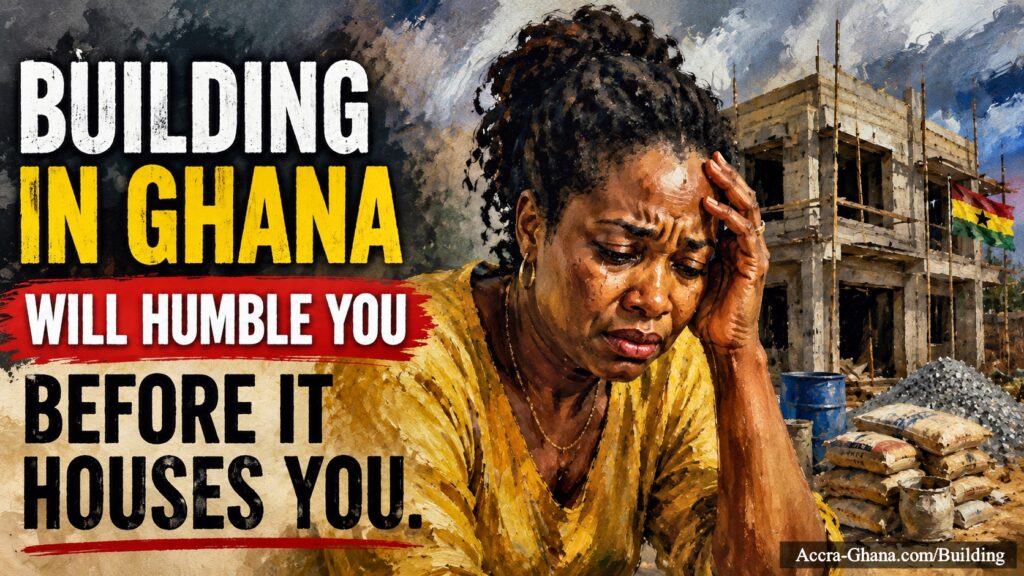
There is a very dangerous lie floating around social media about Ghana. The lie wears white linen trousers, drinks coconut water at beach resorts in Labadi, and tells diaspora returnees that building a dream house in Accra is “easy.” Then reality enters the room wearing dusty slippers and carrying a broken wheelbarrow. Suddenly the dream turns into emotional warfare. The viral YouTube video from More To Dela titled “Building In Ghana Has Completely Broken Me & It Will You Too” exposed something many Ghanaians secretly know but rarely admit publicly. Building in Ghana is not just construction. It is psychological combat. It drains money, patience, relationships, and sometimes even sanity. In Accra especially, where land prices rise faster than politicians’ promises during election season, many people discover too late that the real cost of building a house is not cement. It is emotional survival.
The Ghanaian Dream House Is Slowly Becoming A National Mental Health Project
In Ghana, owning a house is treated like reaching heaven before death. Families celebrate it like a graduation, wedding, and funeral combined. Parents pressure their children to build. Uncles compare compounds like football trophies. Friends suddenly respect you more once your gate becomes taller than theirs. This obsession has created a culture where many people rush into construction emotionally unprepared. Everybody sees the finished mansion in East Legon. Nobody sees the owner crying inside a half tiled bathroom because the contractor vanished with the plumbing money. In Accra, houses are no longer just places to sleep. They are social weapons. They announce class, status, and financial victory. That pressure pushes ordinary people into construction projects that slowly consume their peace. Sometimes the house is not even complete, yet the owner has already developed stress related hypertension from arguing with electricians every morning under the burning Ghana sun.
Building In Accra Feels Like Funding A Corruption Subscription Service
One of the most painful truths about construction in Ghana is the endless leaking of money. Your budget enters the project healthy and confident. Three months later it looks like a goat that crossed the motorway at Circle during rush hour. Prices change daily. Materials disappear mysteriously. Workers inflate invoices like they are competing in a national balloon festival. In Accra, even buying ten bags of cement can turn into detective work. Somebody always wants to “chop small.” The supplier wants extra money. The transporter wants fuel adjustment. The artisan suddenly discovers “unexpected complications.” Before long, the project starts behaving like a hungry extended family member who always says he only needs “small help.” This is why unfinished buildings decorate Accra like permanent monuments to optimism. Many projects do not stop because owners are lazy. They stop because Ghana quietly drained them financially while smiling politely the entire time.
Why Many Diaspora Returnees Are Shocked By Construction In Ghana
Diaspora Africans returning to Ghana often arrive with Western expectations and Ghanaian nostalgia. That combination is emotionally dangerous. In Europe or America, systems usually function with predictable timelines, contracts, inspections, and accountability. In Ghana, timelines behave like spiritual suggestions. A worker who promised Tuesday may arrive Friday afternoon smiling confidently as if nothing happened. Delays become part of daily life. Materials arrive late. Boreholes fail. Light poles become your personal responsibility. Suddenly the dream of “coming home” starts feeling like unpaid internship labor under tropical heat. Many diaspora returnees underestimate how mentally exhausting it is to constantly supervise adults who are supposedly professionals. Some even discover that they must manage the project manager himself. That realization alone can break a person emotionally because it destroys the illusion that money automatically creates efficiency in Ghana.
Accra Has Mastered The Art Of Looking Rich While Functioning Poorly
The modern Ghanaian city is obsessed with appearance. Luxury apartments rise beside open gutters. Glass office buildings stand proudly beside roads filled with flooding and chaos. Building projects reflect this same contradiction. Many homes in Accra look impressive from outside but hide terrible workmanship inside. Crooked tiles. Leaking roofs. Dead spaces. Poor ventilation. Random staircase designs that feel like punishment from angry ancestors. People prioritize aesthetics over functionality because Ghanaian society rewards visual success more than structural quality. This is why social media videos of beautiful mansions often hide years of suffering behind the scenes. The owner posts drone footage with inspirational music while secretly fighting depression from construction stress. Accra has become a city where many people are emotionally drowning beneath polished surfaces. The beautiful kitchen hides the exhausted soul standing inside it.
The Real Construction Material In Ghana Is Patience
Many people believe houses in Ghana are built with cement blocks and iron rods. Wrong. The true foundation material is patience. Without patience, construction in Accra will spiritually beat you like a stolen generator during a power outage. Workers will test your blood pressure daily. Electricians will vanish mid project. Carpenters will suddenly attend funerals for relatives you suspect never existed. Rain will destroy freshly completed work. Prices will jump overnight because of inflation or import problems. Through all this, society still expects you to remain calm and grateful. Ghanaians even have a national phrase for surviving dysfunction. “Please exercise patience.” It is basically the unofficial slogan of every failed system in the country. From hospitals to roads to construction projects, patience becomes mandatory because efficiency is treated like luxury instead of normal human expectation.
Ghanaian Society Romanticizes Struggle Too Much
One reason construction suffering continues in Ghana is because people normalize it. Many older generations wear hardship like a badge of honor. If your building project did not emotionally torture you, some people almost believe you cheated. This mentality is dangerous because it excuses incompetence and corruption. Instead of demanding better standards, people adapt psychologically to dysfunction. Somebody steals materials and people shrug. Contractors delay projects for years and society says “that is Ghana for you.” Imagine a country where frustration has become cultural tradition. The result is that many talented young Ghanaians now dream more about escaping the system than fixing it. They watch their parents spend decades building unfinished homes while sacrificing health, happiness, and relationships. Then politicians stand in expensive suits promising development while ordinary people struggle to install simple plumbing without financial trauma.
Women Building In Ghana Face A Different Level Of Pressure
The emotional weight becomes even heavier when women build independently in Ghana. Society constantly questions them. People assume a man must secretly be funding the project. Others mock delays or criticize decisions with cruel confidence. A single woman building a large house in Accra automatically becomes public conversation material for bored relatives and gossip addicted neighbors. The pressure intensifies because women are expected to remain emotionally composed while handling chaos. Meanwhile many male contractors still underestimate female clients, assuming they know nothing about construction. That forces women to become aggressive supervisors just to protect their investments. Videos like Dela’s resonate deeply because they expose the hidden exhaustion many Ghanaian women experience silently while trying to build security for themselves and their children in a society that constantly doubts their capability.
The Half Finished Buildings Across Accra Are Stories Of Human Exhaustion
Every unfinished building in Accra tells a story nobody discusses honestly. Behind every exposed block wall is somebody’s interrupted dream. A divorce. A death. A lost job. A visa rejection. A medical emergency. A business collapse. These structures stand everywhere across the city like physical evidence of emotional battles. Some have remained unfinished for ten or twenty years while weeds slowly reclaim the compound. Yet people still continue building because property ownership in Ghana feels tied to dignity itself. Renting forever is often viewed as failure. That social pressure keeps people trapped in endless construction cycles even when the process is clearly damaging their mental health. In many ways, modern Accra itself resembles a giant unfinished project. Ambitious. Chaotic. Expensive. Emotionally draining. Yet somehow still full of stubborn hope.
Why Building In Ghana Still Keeps Pulling People Back
Despite all the suffering, people continue building in Ghana because the dream remains powerful. There is something deeply emotional about creating a permanent home on African soil. For many diaspora returnees, building in Ghana represents freedom from Western mortgages and racial alienation. For locals, it represents survival, legacy, and proof that years of struggle meant something. The tragedy is that the journey often becomes far more brutal than expected. Yet perhaps that is why these houses matter so much emotionally. They are not just buildings. They are scars turned into architecture. Every completed home in Accra contains hidden stories of tears, arguments, exhaustion, sacrifice, and resilience. Ghana will humble you before it houses you. The city will test your patience, your finances, your relationships, and your mental strength. But somehow people still keep building. Maybe because deep down, every Ghanaian still wants one small piece of certainty in a country that constantly feels unfinished.