
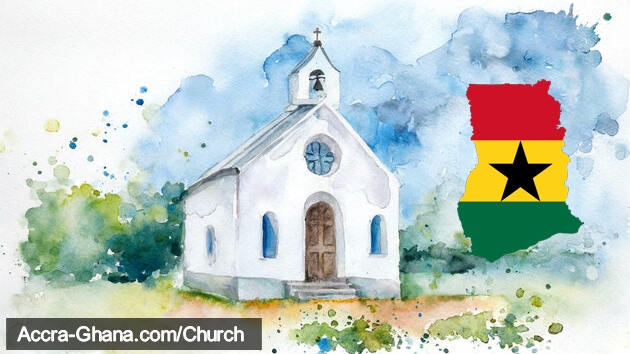
Church in Ghana is more than a place of worship, it is a powerful social institution shaping daily life, politics, and community identity. Across Accra and beyond, churches influence how people think, spend, vote, and even survive economic pressure. From small roadside congregations to massive international ministries, Christianity in Ghana reflects deep faith mixed with cultural tradition and modern hustle. This introduction explores how the church has grown into a central force in Ghanaian society, blending spirituality with social reality. It also highlights its impact on family life, education, and hope in a country where faith often carries the weight of survival.
Faith, Power, and Social Reality Explored
Church in Ghana is not just a place you go on Sunday. It is a national lifestyle, a social engine, and sometimes a psychological escape room where reality, hope, fear, and money all sit in the same wooden pew sweating together.
The Role of Church in Ghanaian Society and Daily Life
Ghana is overwhelmingly Christian, with roughly 70%+ of the population identifying with various denominations, especially Pentecostal and Charismatic movements, alongside Catholics, Methodists, Presbyterians, and many independent ministries. ([Wikipedia][1]) But that simple statistic hides a much louder truth: churches are everywhere. Not just spiritually, but physically and economically. In Accra, you can walk one street and pass more churches than pharmacies, and that already tells you something about what the country is really running on: faith, pressure, and survival hope wrapped in loud speakers.
How Churches Shape Politics and Culture in Ghana
The modern Ghanaian church scene is heavily dominated by Pentecostal and Charismatic churches, the kind where worship feels like a concert, prayer feels like negotiation, and miracles are treated like urgent delivery services. ([Wikipedia][2]) Some of these churches are massive institutions with global reach, others are small storefront setups squeezed between hair salons and mobile money kiosks. In Accra alone, there are hundreds of Christian churches competing for attention, members, and Sunday offerings like spiritual supermarkets.
Inside the Growth of Christianity in Ghana Today
Historically, Christianity did not grow naturally in isolation. It came through European missionaries during colonial times, especially Methodists, Presbyterians, and Catholics, who built schools, hospitals, and churches together. That is why in Ghana, church and education are still emotionally married. Even today, many elite schools are tied to missions, and many families still treat church attendance as part of “good upbringing,” not just belief.
Between Hope, Money, and Influence
But here is where things get uncomfortable in a very Ghanaian way. The church is not only about salvation. It is also about status. Who is your pastor? Which church do you attend? Are you in a “big branch” or a “small branch”? In some circles, church has become branding. Spirituality mixed with social media energy, fundraising pressure, and miracle marketing. Faith is still there, yes, but it is now sitting next to ambition, politics, and sometimes outright business thinking.
The Hidden Social Power of Churches in Ghana
At the same time, you cannot ignore the emotional role churches play. In a country where systems often fail, hospitals are expensive, jobs are unstable, and public trust is shaky, the church becomes a safety net. People go there not only to pray, but to breathe. To cry. To believe they are still protected in a world that keeps demanding more than it gives.
Why Church Life Dominates Ghanaian Communities
And yet, the contradiction is loud. Some churches genuinely support communities, run schools, and provide real social support. Others turn faith into pressure economics, where blessings feel linked to donations, and miracles sometimes sound like financial instructions. This tension is part of why Ghanaian Christianity is so intense, so expressive, and so emotionally charged.
Pentecostal Movement and the Rise of Church Culture in Ghana
So when you talk about church in Ghana, you are not just talking about religion. You are talking about identity, survival, hope, performance, and sometimes disappointment all fighting for space under one roof. It is beautiful. It is chaotic. And it reflects the country itself almost too accurately.
Church in Ghana: Spiritual Refuge or Social Pressure System
In the end, Ghanaian churches are less about silence and more about sound. Loud prayers, loud faith, loud struggles, and loud hope. Whether you believe in it or question it, you cannot ignore it. It is one of the strongest social forces shaping everyday life in the country, for better and for worse.
Conclusion and Remember about Church in Ghana
Church in Ghana continues to stand at the center of social and spiritual life, shaping how people interpret success, struggle, and survival. It is a space where faith meets everyday reality, where hope is constantly renewed even in difficult economic conditions. While it provides comfort, community, and moral direction for millions, it also reflects deeper societal contradictions around money, influence, and power. The church remains both a sanctuary and a stage for human ambition. Ultimately, understanding church in Ghana means understanding Ghana itself, its resilience, its frustrations, and its enduring belief that tomorrow can still be better than today.