
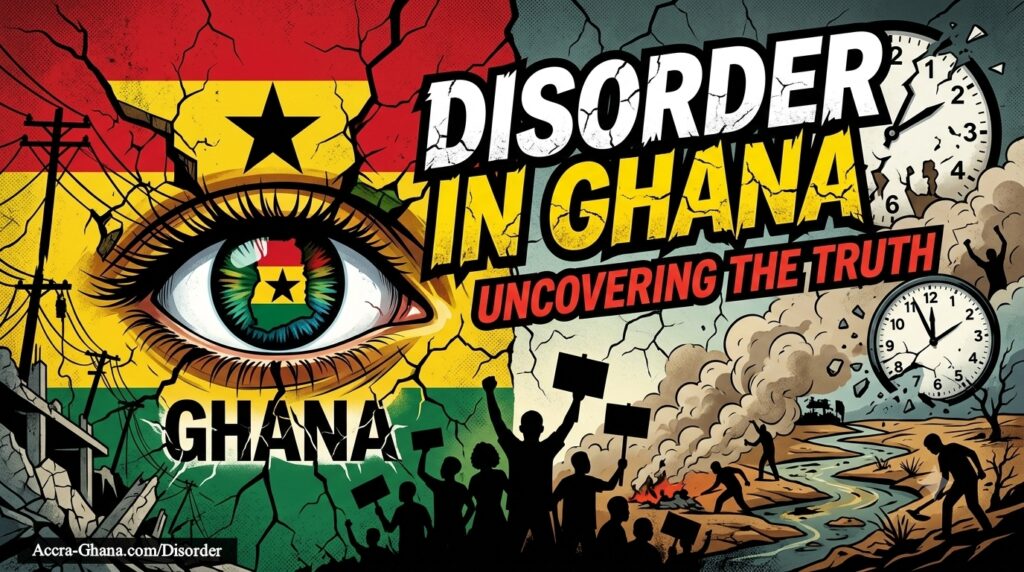
Is Ghana truly as stable as it seems, or is hidden friction rising beneath the surface? Long regarded across West Africa as a model of democracy, Ghana is grappling with complex challenges—from public security concerns and regional chieftaincy disputes to environmental destruction driven by illegal mining (galamsey) and critical mental health care gaps.
Pollution in Ghana
Whether you are tracking West African geopolitical stability, social issues, or regional economic trends, understanding the reality of disorder in Ghana is essential. In this deep dive, we unpack the primary drivers, systemic impacts, and potential solutions defining the nation’s evolving landscape today.
Promote Your Organization Here
The term “disorder” can refer to several different contexts regarding Ghana. Depending on what you are looking for, the primary areas where this applies include:
1. Public Order & Sociopolitical Stability
Ghana is widely considered one of West Africa’s most stable democracies. However, specific localized issues or recurring sources of unrest include:
- Chieftaincy and Land Disputes: Conflicts over land ownership and traditional succession often lead to localized skirmishes (notably in regions like Bawku in the Upper East Region).
- Political Protests & Demonstrations: Periodic civil actions surrounding economic conditions, fuel prices, governance, or illegal mining (galamsey).
- Electoral Friction: Tension occasionally escalates around national election cycles between major political parties (the NPP and NDC).
Disorder in Ghana
2. Health & Medical Disorders
In a public health context, Ghana faces significant challenges with specific medical and mental health conditions:
- Mental Health Conditions: The World Health Organization (WHO) estimates that around 13% of the population experiences some form of mental disorder, with mood disorders (such as depression), anxiety, and schizophrenia being key clinical concerns. Access to psychiatric care remains severely under-resourced relative to need.
- Non-Communicable & Metabolic Disorders: Conditions like hypertension, diabetes, and cardiovascular diseases are steadily rising due to lifestyle and demographic shifts.
- Physical & Developmental Disabilities: Approximately 8% of the population lives with visual, hearing, or motor disabilities according to recent census estimates.
Advertise Your Business Here
3. Environmental & Socio-Economic Disruption
- Galamsey (Illegal Small-Scale Mining): Causes environmental degradation, water pollution, and ecological disorder across rural communities.
- Economic Strain: Inflation, currency fluctuations, and debt restructuring in recent years have caused disruption to local markets and household budgets.
Conclusion and Reminder about Disorder in Ghana
Addressing the complex spectrum of disorder in Ghana requires a balanced approach that pairs institutional reform with strong community engagement. While the country’s democratic foundations remain resilient, long-term stability depends on resolving economic pressures, regulating environmental practices like illegal mining, and expanding access to vital public health and mental healthcare services.
Problem of Waste in Ghana
By tackling these root causes, Ghana can protect its socio-economic progress and uphold its reputation as a peaceful beacon in West Africa. What’s your take on these ongoing developments? Leave a comment below, subscribe for more West African insights, and check out the links in the description for full sources. Contact us with your biggest issues, complaints, questions and comments in Accra, Ghana.