
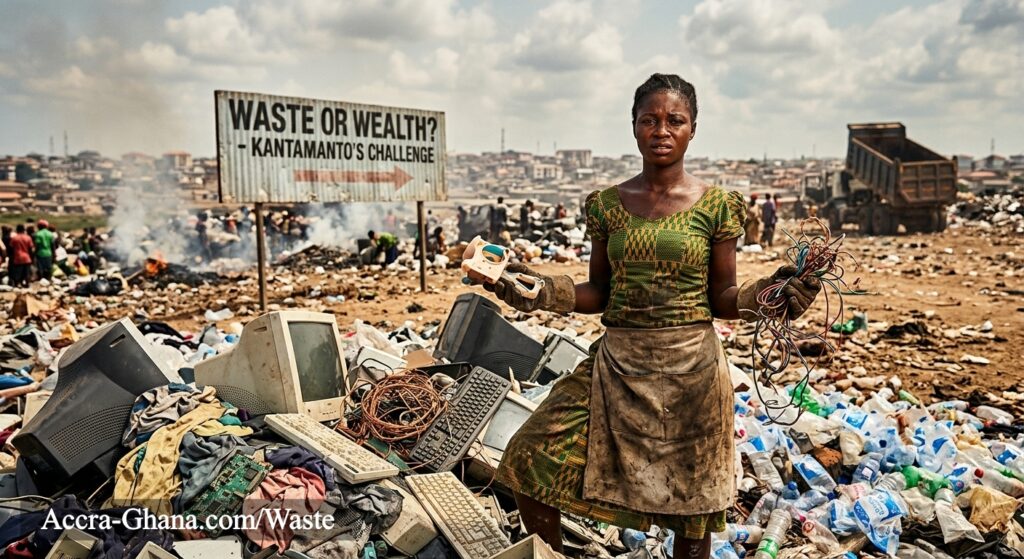
Ghana generates roughly 12,700 metric tonnes of solid waste every day, with major urban hubs like Accra producing over 2,800 tonnes daily. Rapid urbanization, population growth, and inadequate infrastructure have made waste management one of the country’s most critical environmental and public health challenges.
Problem of Pollution in Ghana
Key Categories of Waste
1. Municipal Solid & Plastic Waste
- Composition: Organic matter makes up over 50% of municipal solid waste, followed by plastics (approx. 16%) and paper.
- Plastics Crisis: Ghana generates over 1.1 million tonnes of plastic waste annually. Single-use plastics, water sachets, and packaging account for a substantial portion. Only about 5% of plastic waste is formally recycled.
- Disposal Practices: Uncollected waste often clogs stormwater drains and gutters, worsening urban flooding during the rainy season, or ends up burnt in open air and dumped into the Atlantic Ocean.
Advertise Your Business Here
2. Textile & Fast Fashion Waste (Kantamanto)
- Import Volume: Millions of secondhand garments (known as Obroni Wawu) arrive weekly at Kantamanto Market in Accra.
- Environmental Burden: An estimated 40% of imported used clothing is unsellable quality. This creates massive textile heaps in landfills, informally burned piles, and ocean pollution along the Gulf of Guinea coast.
Destruction from Flooding in Ghana
3. Electronic Waste (E-Waste)
- Global Shipping Hub: Ghana remains a primary destination for foreign electronic waste.
- Agbogbloshie Legacy: Although the notorious Agbogbloshie scrap yard was demolished by authorities in 2021, informal e-waste recycling and burning continue across smaller satellite processing sites in Accra and surrounding regions. Informal workers extract valuable heavy metals (copper, gold) through open burning, releasing severe toxic chemicals like lead, mercury, and dioxins into the air, soil, and nearby waterways.
Structural & Systemic Challenges
- Informal Sector Reliance: Informal waste collectors (“Kayayei”, informal scavengers, and tricycle operators) collect over 50% of urban waste and drive the vast majority of local recycling efforts. However, they often operate without formal legal protection, health standards, or institutional integration.
- Landfill Infrastructure Deficits: Most disposal sites are unengineered open dumpsites rather than sanitary landfills, lacking leachate containment systems to prevent groundwater contamination.
- Socio-Economic Disparities: Formal waste collection service rates reach nearly 100% in high-income neighborhoods, while coverage drops to roughly 40% in low-income areas.
Innovation & Interventions
- Upcycling & Eco-Engineering: Local innovators (such as Nelplast) mix recycled single-use plastics with sand to create durable, low-cost pavement blocks and road surfacing, reducing the reliance on traditional concrete.
- National Policy Initiatives: Government frameworks, such as the National Plastic Action Partnership (NPAP), aim to transition Ghana toward a circular economy model by incentivizing private recycling initiatives and waste-to-value business models.